




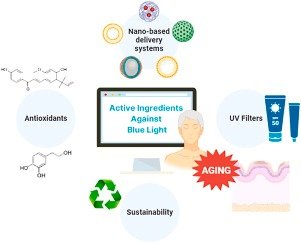
Blue Light Protection in Skincare: Myth, Science, and Formulation Strategies In the age of digital screens and ubiquitous device use, blue light protection has become a trending topic in the skincare world. But beyond buzzwords, what does blue light do to skin? Does blue light protection really work? And how are skincare formulators incorporating effective actives and technologies into products? This article separates myth from science and explores practical formulation strategies for blue light defense.
What Is Blue Light?
Blue light — also known as high-energy visible (HEV) light — is part of the visible light spectrum, with wavelengths between approximately 400–500 nm. It is emitted naturally by the sun and artificially by screens (smartphones, computers, TVs, LEDs). Unlike UV radiation, blue light is not strong enough to cause sunburn, but researchers have been studying whether chronic exposure may contribute to oxidative stress, inflammation, pigmentation, and signs of aging.
Separating Myth from Science:-
Myth: Blue Light Causes Sunburn
Fact: Blue light does not cause erythema (sunburn) like UVB and UVA do. Laboratory studies confirm that blue light doesn’t penetrate deep enough to trigger the same immediate inflammatory responses caused by UV light.
Myth: Screens Are as Harmful as Sun Exposure
Fact: The intensity of blue light from digital devices is far lower than sunlight. Therefore, everyday screen exposure is unlikely to cause significant direct skin damage. However, prolonged exposure may still generate free radicals.
Science: Blue Light Can Contribute to Oxidative Stress and Pigmentation
Research suggests that high doses of blue light may induce reactive oxygen species (ROS) in skin cells, leading to oxidative stress, inflammation, and potential damage to collagen and elastin. In some individuals — especially those with darker skin tones — blue light has been linked with post-inflammatory hyperpigmentation and uneven skin tone.
This means concerns are not unfounded, but context matters: blue light from screens is much less intense than solar blue light, which is a more relevant clinical concern.
Why Blue Light Protection Matters:-
While the magnitude of blue light’s impact continues to be studied, there are three primary reasons skincare brands include blue light defense:
- Consumer Demand
Users spend long hours on screens and want products that address modern lifestyle stressors, especially around aging, dullness, and pigmentation.
- Oxidative Stress Management
Blue light can stimulate ROS, which contribute to cellular aging, breakdown of skin matrix proteins, and inflammation.
- Pigmentation Concerns
Some studies show that blue light may exacerbate hyperpigmentation in Fitzpatrick skin types IV–VI, making protection — especially for darker skin tones — desirable.
Key Ingredients for Blue Light Protection:-
To defend skin against blue light effects, formulators focus on antioxidants and compounds that reduce oxidative stress:
- Antioxidants
Antioxidants neutralize free radicals formed by blue light exposure:
• Vitamin C (Ascorbic Acid/Derivatives): Brightening and antioxidant protection
• Vitamin E (Tocopherol): Strengthens the skin barrier and enhances antioxidant defense
• Niacinamide: Anti-inflammatory, improves barrier function
• Polyphenols (Green Tea, Resveratrol): Potent antioxidants that mitigate ROS
These ingredients help protect against oxidative damage, which is a key mechanism linked to blue light.
Formulation Strategies for Blue Light Defense
Skincare products claiming blue light protection often leverage the following formulation strategies:
- Antioxidant-Rich Serums
Serums high in antioxidants help neutralize free radicals before they damage skin cells. Combining synergistic antioxidants (e.g., Vitamin C + Vitamin E + Ferulic Acid) can enhance photoprotection and stability.
- Barrier-Strengthening Ingredients
A strong skin barrier is less prone to environmental stress. Ingredients like ceramides, fatty acids, and cholesterol help support barrier integrity.
- Pigment-Targeting Actives
For pigmentation concerns, ingredients like niacinamide, licorice root extract, and kojic acid can help regulate melanin production and reduce uneven tone.
- Brightening Complexes
Blue light can dull complexion over time. Vitamin C derivatives, alpha-arbutin, and kojic acid help maintain radiance and address pigmentation.
It’s important to note that blue light protection isn’t a standalone sunscreen claim. Traditional broad-spectrum SPF products remain essential for UV protection.
Can Sunscreen Protect Against Blue Light?
Most conventional sunscreens are formulated to protect against UVA and UVB radiation. However:
• Physical sunscreens (Zinc Oxide, Titanium Dioxide): Provide some protection across the visible spectrum, including portions of blue light.
• Chemical sunscreens: Primarily block UV radiation and do not offer meaningful protection against visible blue light.
Therefore, while sunscreen should always be used, blue light protection claims often rely on antioxidants and barrier enhancers rather than SPF alone.
Blue light protection isn’t a miracle claim, nor does blue light cause sunburn like UV radiation. However, the science supports that blue light can contribute to oxidative stress and pigmentation concerns, particularly under prolonged exposure.
The best defense remains a combination of broad-spectrum SPF, antioxidant-rich skincare, and barrier support — a formulation strategy that simultaneously simplifies routines and provides targeted protection against modern environmental stressors.
Contact Nikole Kozmetics Pvt. Ltd.
📧 Email: info@nikolekozmatics.com
📞 Mobile: +91 81691 30305
🌐 Website: https://www.nikolekozmatics.com
🔵 Facebook: https://www.facebook.com/247nikole/
📸 Instagram: https://www.instagram.com/nikolekozmetics/
🔗 LinkedIn: https://www.linkedin.com/company/nikole-kozmetics-pvt-ltd/
🛒 India Mart: https://www.indiamart.com/nikolekozmetics/
