




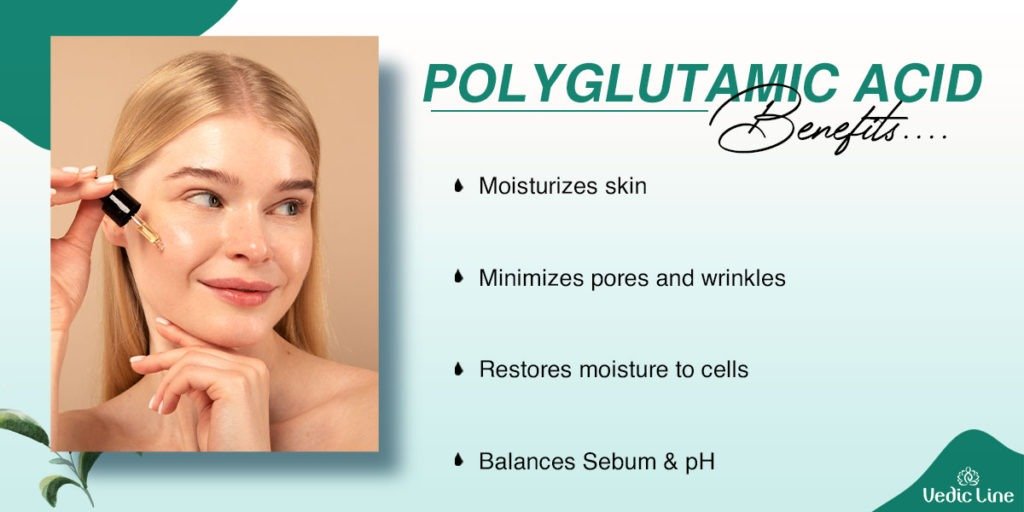
Hydration remains the foundation of healthy, radiant skin. For years, Hyaluronic Acid (HA) has dominated the skincare industry as the ultimate humectant and moisture-binding ingredient. However, a new contender Polyglutamic Acid (PGA) is rapidly gaining attention as a next-generation hydration powerhouse.
With claims of superior moisture retention, enhanced barrier protection, and improved skin elasticity, many are asking: Is Polyglutamic Acid the next hydration gold standard?
Let’s explore the science, benefits, and formulation differences between Polyglutamic Acid and Hyaluronic Acid.
Understanding Hyaluronic Acid: The Hydration Icon
Hyaluronic Acid (HA) is a naturally occurring glycosaminoglycan found in the skin’s extracellular matrix. Known for its exceptional water-binding capacity, HA can hold up to 1,000 times its weight in water.
Key Benefits of Hyaluronic Acid:
• Intense skin hydration
• Improved skin plumpness
• Reduction in fine lines and wrinkles
• Enhanced skin elasticity
• Immediate smoothing effect
HA works primarily as a humectant, drawing moisture from the environment into the skin. It is widely used in serums, moisturizers, anti-aging products, and dermal fillers.
However, despite its popularity, HA has limitations. It primarily works on hydration but offers minimal barrier repair or long-term structural protection.
What Is Polyglutamic Acid (PGA)?
Polyglutamic Acid (PGA) is a naturally derived peptide polymer produced through fermentation of Bacillus subtilis, commonly associated with fermented soybeans (natto). In skincare, PGA is recognized as a powerful moisture retention agent and film-forming humectant.
Unlike Hyaluronic Acid, which penetrates the upper skin layers, PGA forms a lightweight protective film on the skin’s surface, helping to reduce trans epidermal water loss (TEWL) and strengthen the skin barrier function.
Hydration Power: Which One Performs Better?
- Moisture Retention Capacity
Studies suggest that Polyglutamic Acid can retain up to four times more moisture than Hyaluronic Acid, making it exceptionally effective in preventing dehydration. Its film-forming structure locks in hydration and improves moisture longevity.
Hyaluronic Acid, on the other hand, delivers instant hydration but may require occlusive ingredients to prevent moisture evaporation.
- Skin Barrier Protection
One of PGA’s biggest advantages is its ability to reduce trans epidermal water loss (TEWL). By forming a protective layer, it strengthens the skin barrier, making it beneficial for:
• Dry skin
• Sensitive skin
• Compromised barrier conditions
• Post-procedure recovery
HA hydrates effectively but does not significantly reinforce the lipid barrier on its own.
- Anti-Aging Benefits
Both ingredients support anti-aging skincare, but in different ways:
• Hyaluronic Acid improves skin volume and temporarily smooths wrinkles.
• Polyglutamic Acid enhances elasticity and helps maintain collagen-supporting hydration.
When combined with peptides, ceramides, niacinamide, and antioxidants, both ingredients amplify anti-aging results.
Can Polyglutamic Acid Replace Hyaluronic Acid?
The real question isn’t whether PGA can replace HA — but whether they work better together.
Why They’re Powerful as a Duo:
• HA hydrates deeper layers.
• PGA locks in surface moisture.
• Together, they create a multi-layer hydration system.
• Improved skin smoothness and elasticity.
• Enhanced long-term moisture retention.
Many modern advanced skincare formulations now combine PGA and HA to deliver multi-level hydration technology.
The Future of Hydration in Skincare:-
The shift toward barrier-focused skincare and long-lasting hydration solutions positions Polyglutamic Acid as a strong contender in the future of cosmetic science.
While Hyaluronic Acid remains a hydration staple, Polyglutamic Acid offers added moisture retention, TEWL reduction, and barrier reinforcement, making it a promising next-generation ingredient.
Contact Nikole Kozmetics Pvt. Ltd.
📧 Email: info@nikolekozmatics.com
📞 Mobile: +91 81691 30305
🌐 Website: https://www.nikolekozmatics.com
🔵 Facebook: https://www.facebook.com/247nikole/
📸 Instagram: https://www.instagram.com/nikolekozmetics/
🔗 LinkedIn: https://www.linkedin.com/company/nikole-kozmetics-pvt-ltd/
🛒 India Mart: https://www.indiamart.com/nikolekozmetics/
